Pet Health · Edmonton
Spay and Neuter Recovery: An Edmonton Pet Checklist
A practical day-by-day spay and neuter recovery guide for dogs and cats: activity, food, incision checks, cone use, and signs that mean call the vet.
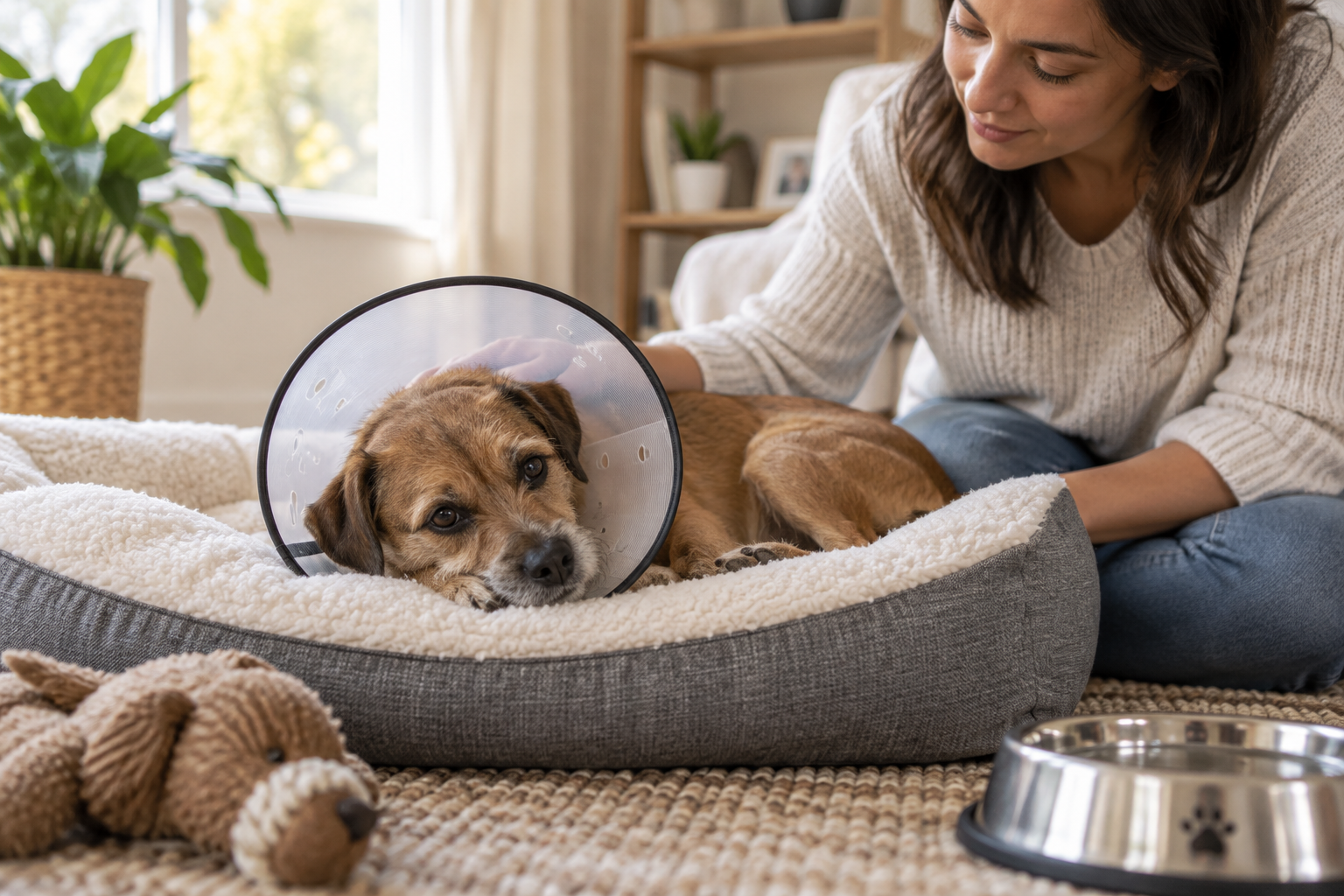
After a spay or neuter, keep your dog or cat quiet, prevent licking, check the incision daily and follow the discharge instructions from your veterinary team. Many pets need about 7–14 days of restricted activity, but recovery depends on the procedure and the individual patient. Call if the incision opens, swelling or discharge increases, your pet vomits, or they seem unusually weak. Breathing trouble, collapse or major bleeding need emergency care.
Use this checklist to prepare your home and spot changes worth reporting. Lakeview Animal Hospital provides individual written instructions after spay and neuter procedures; those directions should take priority over a general article.
Before your pet comes home: set up a recovery space
- Choose a quiet, clean room away from stairs, rough play and other pets. Give your cat an easy-to-reach litter box and your dog a comfortable place to rest.
- Have the recommended cone or recovery garment ready. Confirm that it actually prevents your pet from reaching the incision.
- Write down medication times, the clinic’s phone number and the date of any recheck or suture removal.
- Ask the team about food, water, walks and any special instructions for your pet. Do not copy fasting or medication directions from another animal.
The first evening: what should I watch?
Your pet may be quieter than usual after anesthesia but should be easy to rouse and able to move safely. The AAHA anesthesia guidance notes that some sedation or a smaller appetite may occur in the first 12–24 hours. Follow the amount and timing of food and water on your discharge sheet. If your pet cannot be roused normally, has breathing trouble, pale gums, repeated vomiting or collapses, seek emergency advice immediately.
Check the incision before bedtime so you know its starting appearance. Take a clear photo for comparison if your pet tolerates it. Give only medication prescribed for this pet and procedure. Human pain medicines can be dangerous for animals.
Days 1–3: protect the incision
Keep activity limited to what your veterinarian permits. For dogs, that commonly means short leash trips for toileting, without running, jumping or play with other dogs. For cats, a small quiet room can reduce jumping and make monitoring easier. The ASPCA’s post-surgery instructions emphasize restricting movement and keeping the incision dry during the healing period.
Look at the incision once or twice a day, without pulling it apart or scrubbing it. A little initial redness or bruising may be expected depending on the procedure, but it should not steadily worsen. Prevent licking or chewing even if the incision looks fine. If the cone slips off or your pet can reach the area, call the clinic for a better fit or an alternative.
Days 4–10 and beyond: do not rush back to normal
Many pets look energetic before the tissues have healed. Continue the prescribed activity restriction until your veterinarian clears normal exercise. Avoid bathing or swimming until the clinic says the incision is ready. Attend any recheck or suture-removal visit, even if the surface looks healed. The VCA guidance on cat incisions notes that activity restriction and suture timing vary with the incision and procedure.
Ask at discharge when your pet may return to daycare, off-leash exercise, jumping onto furniture or outdoor roaming. A routine neuter, a spay and an unusual or more complex surgery can have different recovery plans.
Call the veterinary team if you notice these changes
- The incision is opening, bleeding, leaking fluid, developing a bad smell, or becoming more red or swollen.
- Your pet keeps licking despite protection, seems increasingly painful, or is not settling.
- Vomiting, diarrhea, persistent loss of appetite, or lethargy that is not improving.
- Difficulty urinating or any change the discharge sheet told you to report.
For collapse, difficult breathing, major bleeding or severe weakness, contact a 24-hour emergency veterinarian immediately. If you are unsure whether a change is normal, call rather than waiting for an online form reply.
Common questions
Can I take the cone off when my pet is supervised?
Only if your veterinary team specifically says it is safe. Pets can lick or chew an incision quickly. A well-fitting cone or approved garment usually needs to stay on for the period your team recommends.
Can I put ointment on the incision?
Do not apply creams, antiseptics or bandages unless your veterinarian instructs you to. Products can irritate the area or interfere with healing.
How long before a dog can run or a cat can jump?
Ask the veterinarian who performed the surgery. Many standard plans restrict strenuous activity for 7–14 days, but the safe return date depends on the procedure, healing and any complications.
Planning a spay or neuter in South Edmonton? Call Lakeview Animal Hospital at (587) 463-9002. We are at 4351 Savaryn Drive SW. Our team can discuss timing, preparation, an examination and the recovery plan for your dog or cat. For a non-urgent appointment request, use our contact page.
Lakeview Animal Hospital pet health information. General education only; your pet’s discharge instructions and veterinarian’s advice take priority.