Pet Health · Edmonton
Pet Cryotherapy in Edmonton: Is a Cryoprobe Right for a Lump?
Can a skin tag or lump on your dog or cat be frozen? Learn how veterinary cryoprobe treatment works, when testing comes first, and what healing may involve.
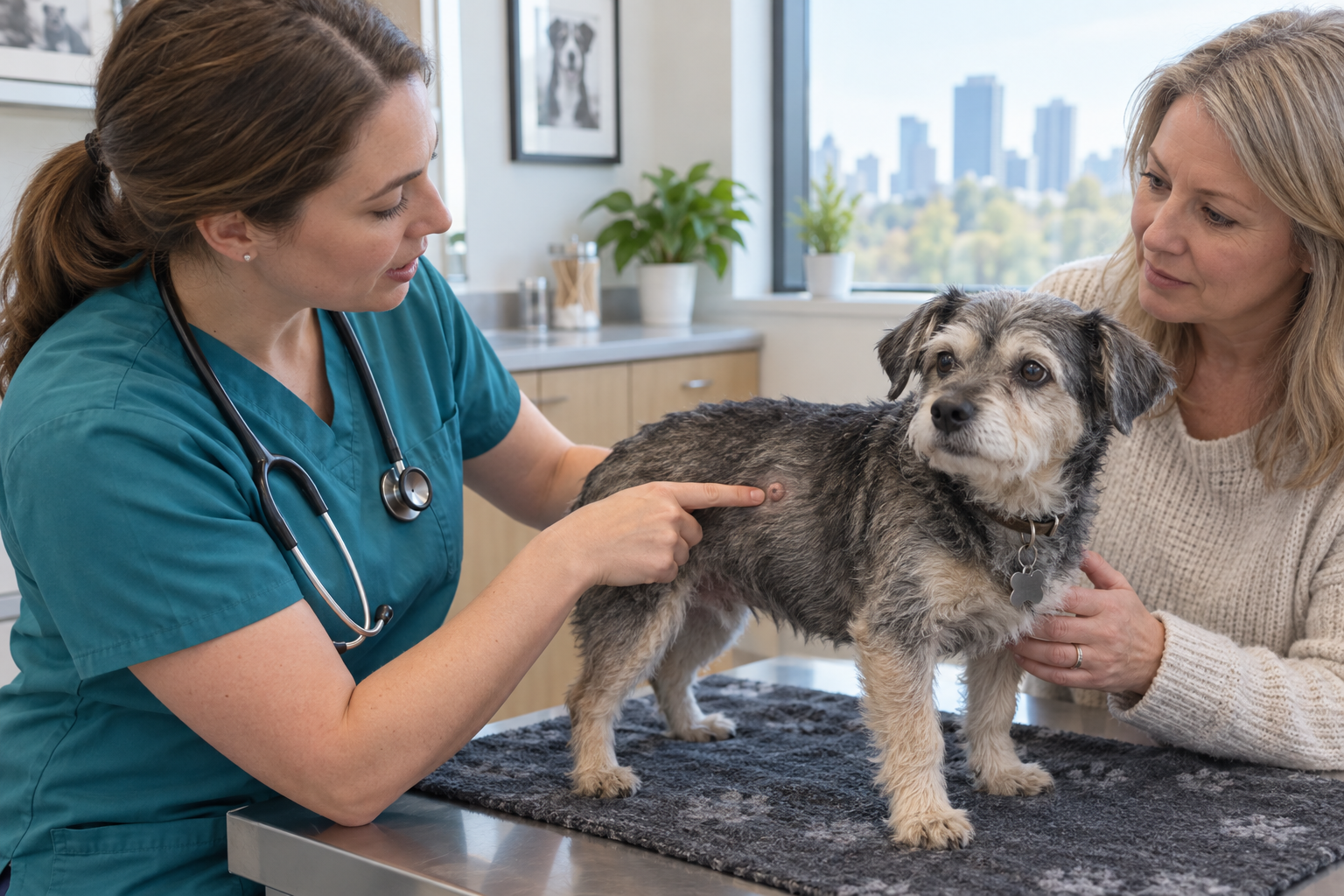
A cryoprobe uses controlled, intense cold to treat selected superficial skin lesions. It may be an option for some dogs and cats, but a new lump should be examined before anyone tries to freeze it. Its appearance alone cannot tell you whether it is harmless, and freezing tissue can make later diagnosis more difficult. Your veterinarian may recommend a needle sample, biopsy, surgery, monitoring or referral instead.
Lakeview Animal Hospital offers cryoprobe assessment and treatment in South Edmonton when a veterinarian determines it is suitable. This guide explains the questions to ask before booking.
What is veterinary cryotherapy?
Veterinary cryosurgery, often called cryotherapy, applies extreme cold to a small area of abnormal tissue. It is different from placing a cold pack on an injury. The cold damages the targeted cells; over time, the treated tissue may crust and shed as the area heals. VCA’s veterinary guide to cryosurgery describes the technique and why it may be useful for certain skin conditions.
A cryoprobe allows the veterinarian to apply the cold to a defined area. The treatment plan depends on the lesion’s size, depth and location, as well as the pet’s comfort and health. Some pets need local anesthesia or sedation; do not assume the procedure will always be done fully awake.
Can every skin tag, wart or lump be frozen?
No. “Skin tag” is a description, not a diagnosis. A lump that looks similar on the surface can have a very different cause and may need testing or removal with tissue sent to a laboratory. At Lakeview, the veterinarian considers the lesion’s appearance, growth pattern, location and your pet’s history before recommending cryotherapy.
Tell the clinic promptly if the area is growing quickly, bleeding, ulcerated, painful, changing colour, or causing your pet to lick or scratch. These signs do not prove a particular disease, but they make diagnosis especially important. Cornell’s veterinary diagnostic guidance describes when skin biopsy is useful, including unusual lesions and suspected tumours. Freezing a suspicious lump before a diagnostic plan could remove tissue a pathologist needs to examine.
What happens at a cryoprobe appointment?
- Examination. The veterinarian asks how long the lesion has been present, whether it has changed and whether your pet has other health concerns.
- Discussing options. Depending on the findings, the next step may be a sample, surgical removal, monitoring, cryoprobe treatment or referral. Ask what the team knows and what remains uncertain.
- Comfort and treatment plan. If cryotherapy is appropriate, the team explains how it will be applied, whether local anesthesia or sedation is recommended, and what follow-up is needed.
- Home care and recheck. You receive instructions for keeping the area comfortable, preventing licking and knowing when to call.
Not every patient needs the same number of sessions. The final plan should be based on the diagnosis or best available assessment, rather than a promise that one freezing treatment will solve every lesion.
What can the treated area look like while healing?
Redness, swelling, a colour change and crusting may occur as the treated tissue heals. The exact appearance and timeline depend on the site and treatment. Follow your veterinarian’s instructions about bathing, ointments and preventing licking; do not pick at a scab. Call if there is worsening pain, significant discharge, bleeding that does not stop, a bad smell, or a change that the discharge instructions did not describe.
Ask when the area should be rechecked and what it means if the lesion remains or returns. A recheck lets the veterinarian decide whether healing is on track or whether further testing is warranted.
How much does pet cryotherapy cost in Edmonton?
The estimate depends on the examination, whether diagnostic sampling is recommended, the lesion, comfort measures and any follow-up. A price given without seeing the lump can omit a necessary diagnostic step. At Lakeview, request a plan and estimate after assessment, and ask which parts are included.
Should I book a routine visit or call sooner?
A stable, small lump can usually begin with a regular veterinary appointment, but do not wait indefinitely if it is changing. Call promptly for rapid growth, ulceration, pain, bleeding or a pet who seems unwell. If your pet has severe bleeding or other emergency signs, seek urgent veterinary advice rather than waiting for a cryotherapy appointment.
Have a skin lump you want checked? Call Lakeview Animal Hospital at (587) 463-9002 or request a routine visit through our contact page. We are at 4351 Savaryn Drive SW in Edmonton’s Summerside area. We can examine the lesion and explain whether cryoprobe treatment makes sense for your pet.
Lakeview Animal Hospital pet health information. This article is general education and cannot identify a lump or replace a veterinary examination.