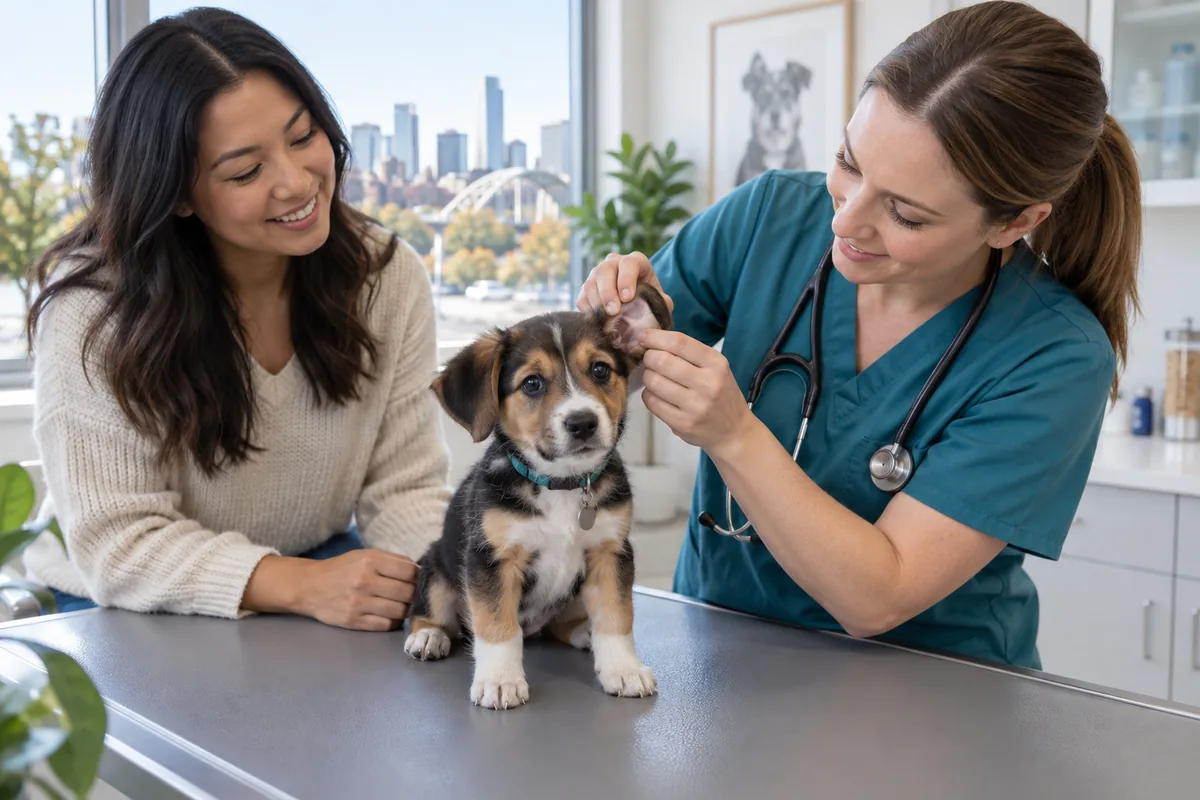
Most puppies start their core distemper, adenovirus and parvovirus vaccine series at about 6–8 weeks of age, then receive doses every 3–4 weeks until at least 16 weeks old. The exact dates depend on your puppy’s age, records and health. Rabies and other vaccines deserve a separate discussion with your veterinarian. Bring any breeder, shelter or previous clinic records to the first visit.
This is a planning guide for Edmonton owners, not a substitute for an individual vaccine plan. At Lakeview Animal Hospital in Summerside, we review your puppy’s history and lifestyle before recommending timing.
A practical first-year puppy vaccine timeline
| Age | What to discuss with your veterinarian |
|---|---|
| 6–8 weeks | First core combination vaccine if your puppy is old enough and healthy; a full first examination and record review. |
| 9–12 weeks | Next core dose, generally 3–4 weeks after the previous one; discuss exposure risks and any lifestyle-based vaccines. |
| 12–16 weeks | Continue the core series. Discuss rabies vaccination and the timing of any additional vaccine your puppy may need. |
| 16 weeks or older | Ensure the core series includes a dose at or after 16 weeks. In higher-risk situations, your veterinarian may advise continuing to 20 weeks. |
| Later in the first year | Book the follow-up your veterinarian recommends. The 2024 WSAVA guidelines discuss a core booster at about six months as one option; your veterinarian will set your puppy’s plan. |
The World Small Animal Veterinary Association’s 2024 vaccination guidelines recommend starting core vaccines no earlier than six weeks and repeating every three to four weeks until at least 16 weeks. The American Animal Hospital Association’s guidance similarly describes a puppy series rather than a single protective shot. A missed dose or an uncertain history does not mean guessing at home; your veterinarian can make a catch-up plan.
Which shots are core, and which depend on lifestyle?
The core combination protects against distemper, adenovirus and parvovirus. Clinics may use slightly different abbreviations on records, such as DAP or DA2PP. These diseases can be serious, particularly for a young puppy. The number of appointments depends partly on when the series began, so “three rounds” is not a reliable rule for every puppy.
Rabies deserves attention even though Alberta’s approach is different from some jurisdictions. Alberta recommends that a veterinarian vaccinate pets against rabies and says the veterinarian should advise on timing and frequency. Do not assume a vaccine schedule from another province or a travel website applies to your puppy. Bring up travel, boarding and any bat or wildlife exposure concerns.
Other vaccines, such as those for leptospirosis or Bordetella, depend on exposure and the vaccine product. Tell your veterinarian whether your dog will visit daycare, boarding, training classes, dog parks, trails or areas with wildlife and standing water. Our vaccination service explains how Lakeview builds an individual plan.
Can my puppy go outside before the last shot?
Young puppies need safe social experiences, and keeping them isolated until the final vaccine can miss an important learning period. The American Veterinary Society of Animal Behavior supports careful socialization before the series is complete. The key is to balance behaviour and infection risk with your veterinarian.
Consider controlled introductions to healthy, appropriately vaccinated dogs and clean, supervised environments. Avoid dog parks, heavily used dog relief areas and contact with unknown dogs or feces until your veterinarian says those settings are appropriate. Carry a small puppy through higher-risk public areas if needed. If your puppy has diarrhea, vomiting, low energy or loss of appetite, call before a class or vaccine visit.
What should I bring to the first puppy appointment?
- All vaccine records, including the date and product for each dose.
- Your puppy’s age or estimated birth date, adoption information and any past illness.
- A list of foods, supplements and medications, including deworming products.
- Your plans for daycare, boarding, travel and puppy classes.
- Questions about parasite prevention, feeding, identification and behaviour.
Ask the clinic to write down the next appointment date and the activities to avoid until then. A puppy visit is also a chance to discuss a wellness plan and what symptoms should prompt a call between doses.
What does a puppy vaccination visit at Lakeview include?
The visit includes an examination, a consultation about your puppy’s health and lifestyle, and the vaccinations agreed for that visit when appropriate. Bring all previous records, even if they are incomplete, so we can reconcile the history and plan the next doses. Tell us about boarding or daycare dates early. See our record and boarding preparation checklist.
Common questions
My puppy already had one shot. Is the series complete?
Usually not. Maternal antibodies can interfere with early vaccines, which is why the core series continues to at least 16 weeks. Bring the record so your veterinarian can check what was given and when.
Can a sick puppy still receive vaccines?
Call before the appointment. A veterinarian should assess new illness, medications and timing rather than assuming vaccination should proceed.
What reactions need urgent help?
Brief soreness or tiredness can occur. Facial swelling, repeated vomiting, breathing difficulty or collapse require immediate veterinary attention. See our urgent care guidance for the right place to call.
Planning puppy shots in South Edmonton? Call Lakeview Animal Hospital at (587) 463-9002. We are at 4351 Savaryn Drive SW, with regular hours Monday–Saturday 8 a.m.–6 p.m. and Sunday 10 a.m.–5 p.m.; statutory holidays are closed. We will review your puppy’s record and help arrange the next visit.
Lakeview Animal Hospital pet health information. This guide is general education; your veterinarian should set the schedule for your individual puppy.