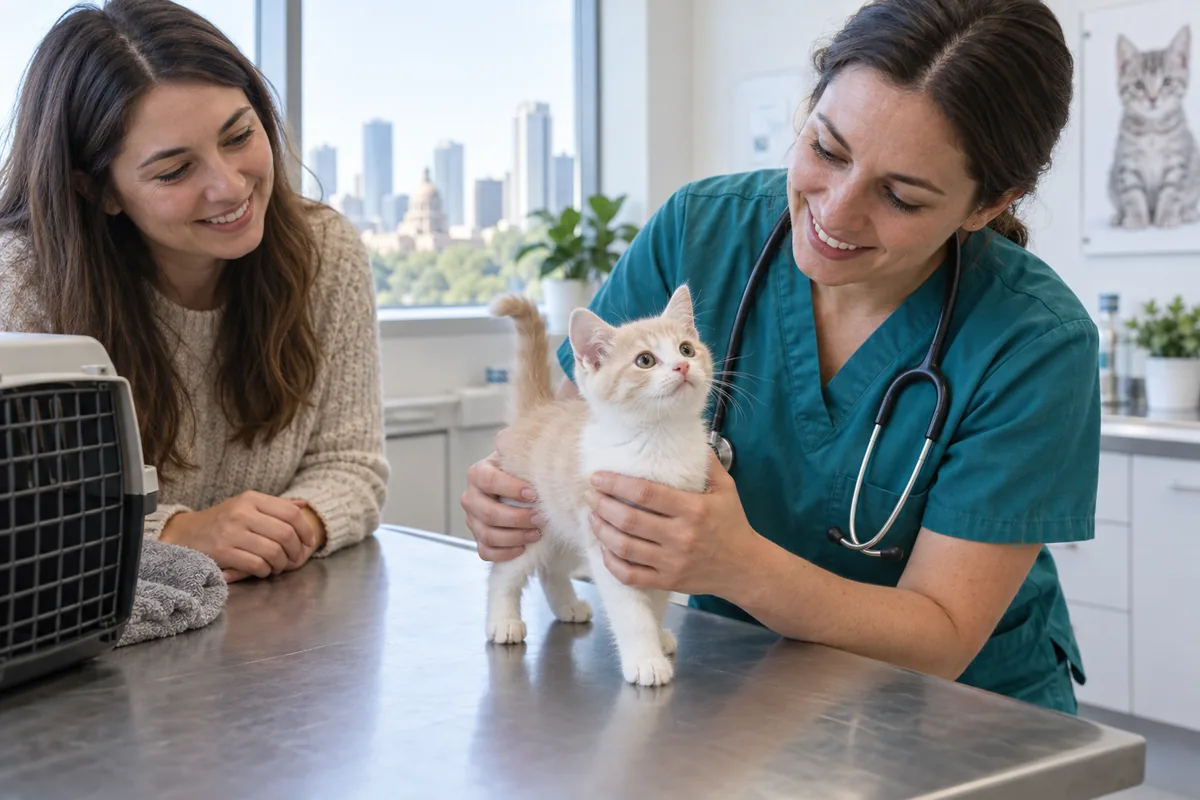
Most kittens need a series of core vaccines, not a single “kitten shot.” The FVRCP combination is usually started no earlier than six weeks of age and repeated every three to four weeks through 16–20 weeks of age. Your veterinarian will also discuss feline leukemia (FeLV) and rabies protection based on age, health, exposure and the product used. Bring any shelter or breeder records so doses are not repeated unnecessarily.
This is a planning guide for Edmonton families, not a prescription for every kitten. Lakeview Animal Hospital provides individualized dog and cat vaccination visits in South Edmonton. A veterinarian will examine your kitten and confirm the exact dates.
What is the usual first-year kitten vaccine timeline?
| Age or stage | What to discuss at the visit |
|---|---|
| About 6–8 weeks | First FVRCP dose, if healthy and eligible; discuss parasites, nutrition and the kitten’s living situation. |
| Every 3–4 weeks afterward | Continue FVRCP boosters through 16–20 weeks of age. Your veterinarian confirms the final dose timing and subsequent booster for your kitten. |
| From about 8 weeks | Discuss FeLV testing and the two-dose initial FeLV series, commonly spaced 3–4 weeks apart. |
| At the appropriate age for the product | Discuss rabies vaccination and the next booster date. Follow your veterinarian’s advice, the vaccine label and applicable local guidance. |
| After the kitten series | Review the next FVRCP, FeLV and rabies dates. Some guidelines consider an FVRCP booster at about six months rather than waiting until a year. |
The AAHA/AAFP feline guidelines and WSAVA vaccination guidelines explain why the FVRCP series extends through 16–20 weeks of age: antibodies received from the mother can interfere with an earlier dose. The schedule is adjusted to the kitten’s start date and risk.
What does FVRCP protect against?
FVRCP is the common name for a combination vaccine against feline viral rhinotracheitis (herpesvirus), calicivirus and panleukopenia. These infections can be serious, particularly in young kittens. Core protection is recommended even for kittens expected to live indoors. “Indoor only” does not mean zero exposure: household animals, boarding, visits to a clinic and an unexpected escape can change risk.
Does an indoor kitten need FeLV and rabies vaccines?
FeLV is especially important to discuss for kittens and young cats. The AAHA/AAFP guidelines treat FeLV vaccination as core for cats younger than one year, while adult boosters depend on exposure risk. A kitten who may later go outdoors, meet unfamiliar cats or join a multi-cat household may have different needs from a low-risk adult. Your veterinarian may recommend FeLV testing before vaccination.
Rabies planning also deserves an individual conversation. Alberta’s rabies prevention guidance explains why an up-to-date vaccine record can matter after an exposure. Do not assume every pet follows the same timing or that a vaccine is legally required in every situation; ask your veterinarian about the product, travel plans and current rules.
What should I bring to the first appointment?
- Any vaccine card or adoption record, including dates and product names if available.
- Your kitten’s approximate birth date, diet, medications and recent illness history.
- Details of other cats in the home, outdoor access, boarding plans and travel.
- Questions about parasite prevention, microchipping, spay/neuter timing and the next visit.
If your kitten is coughing, has diarrhea, seems lethargic or is not eating, call before the appointment. The veterinarian may need to assess illness and decide whether to vaccinate that day. Mild sleepiness or soreness can occur after vaccination; facial swelling, repeated vomiting, breathing difficulty or collapse need immediate veterinary attention.
What if the records are incomplete or a visit is late?
Bring all available paperwork and the previous clinic, shelter or breeder details. We help reconcile the history and discuss what cannot be confirmed. The next dose depends on the vaccine, age and gap; do not assume either that the kitten is fully protected or that every series must restart. See Lakeview’s record and visit-preparation guidance.
Kitten vaccine questions
My kitten missed a booster. Do we start over?
Not necessarily. Bring the record and ask a veterinarian to create a catch-up plan based on age, timing and vaccine type. Avoid guessing or waiting until the kitten is an adult.
Can my kitten meet other cats before the series is complete?
Discuss the setting and the other cats’ health and vaccination status with your veterinarian. A controlled introduction to healthy, known cats is different from an unknown group or boarding facility. Young kittens also benefit from safe, positive social experiences.
Ready to plan your kitten’s first year? Call Lakeview Animal Hospital at (587) 463-9002 or request a routine visit. We are at 4351 Savaryn Dr SW in Edmonton and will give you a clear record of what was administered and what comes next.