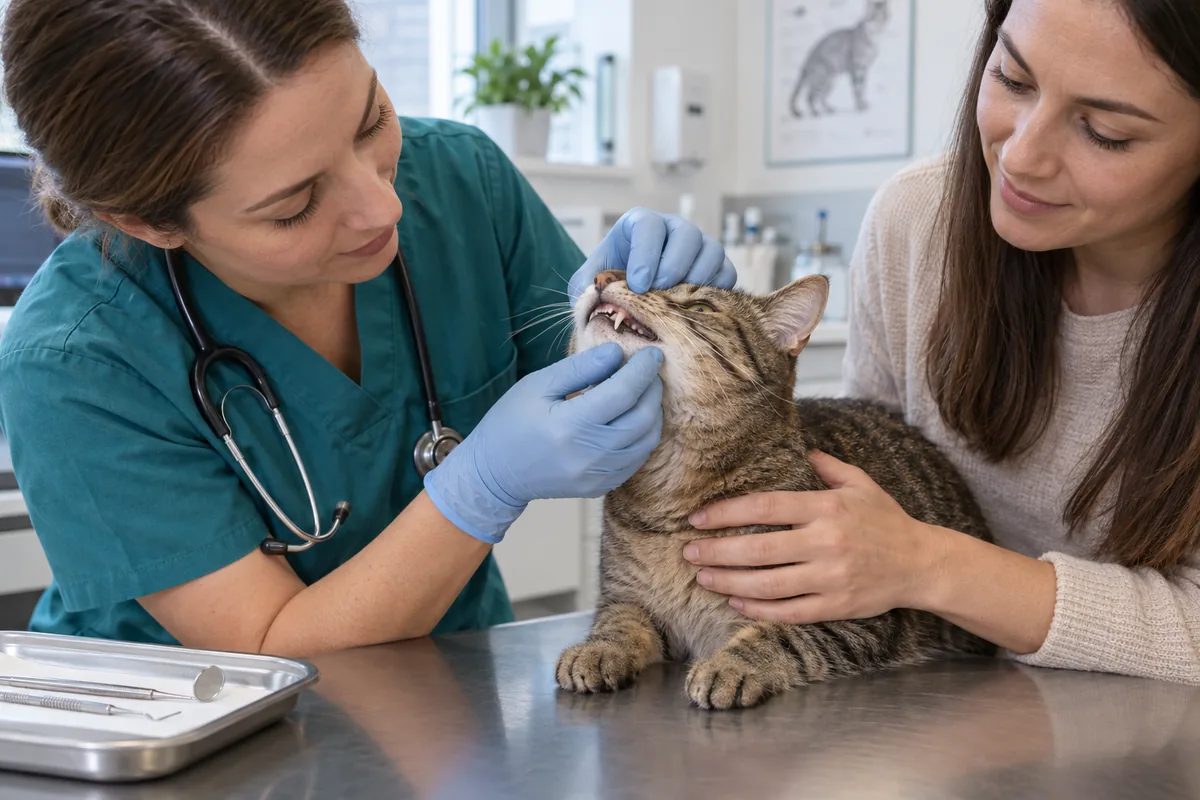
Persistent bad breath, red or bleeding gums, drooling, dropping food, chewing on one side, pawing at the mouth or refusing hard food can signal a painful dental problem in a cat. Book a veterinary examination rather than waiting for your cat to stop eating. Cats often continue eating even when their teeth hurt.
Lakeview Animal Hospital offers oral assessment and professional dental care for cats and dogs in South Edmonton. Call (587) 463-9002 if your cat’s eating or behaviour has changed. If your cat is not eating at all, call promptly; loss of appetite in cats can become serious.
What are the less obvious signs of cat dental pain?
Many owners look for a broken tooth, but dental disease may be hidden below the gumline. Watch for a cat who approaches food eagerly and then walks away, takes longer to eat, drops kibble, switches to soft food, tilts their head while chewing or grooms less. Bad breath and inflamed gums are also worth checking. A cat with severe oral pain may drool or resist having the face touched.
Cornell’s Feline Health Center describes gingivitis, periodontitis and tooth resorption as common feline dental conditions. Tooth resorption can be particularly painful and may not be obvious without a thorough examination and dental imaging.
Does bad breath always mean dental disease?
Not always. Food and other health problems can change breath, but a persistent foul smell should not be dismissed as normal “cat breath.” A veterinarian can examine the mouth and consider whether another condition is contributing. Likewise, a cat who has no bad breath can still have a painful tooth. An annual wellness exam is useful even when your cat appears comfortable.
Why does a dental cleaning usually require anesthesia?
A professional dental procedure is more than scraping visible tartar. The team needs to assess each tooth, clean above and below the gumline, protect the airway, and treat problems discovered during the examination. This cannot be done safely and thoroughly in an awake cat. AAHA’s dental guidelines explain why general anesthesia, airway protection and monitoring are needed for dental procedures. Your veterinarian will evaluate your cat’s individual anesthesia risks and discuss recommended pre-procedure testing.
Dental X-rays can reveal disease that is invisible above the gums. AAHA recommends full-mouth intraoral radiographs for a complete dental assessment. Ask what imaging is included or recommended in your cat’s treatment plan and how the team will contact you if extractions are needed.
What happens at a dental consultation?
The veterinarian starts with the history you provide and an awake oral examination as your cat tolerates it. They can discuss likely concerns, whether a professional dental procedure is recommended, what testing may be useful and how estimates work. The full extent of disease may only become clear under anesthesia after probing and imaging, so an initial estimate can change if hidden disease is found. Ask how consent for additional treatment will be handled.
What can I do at home?
For a comfortable cat, regular brushing with a cat-safe toothpaste can help reduce plaque. Introduce it slowly and keep the experience positive. Do not force brushing on a cat with painful or bleeding gums. Human toothpaste is inappropriate for pets. Your veterinarian can recommend other options, including products supported by the Veterinary Oral Health Council, and explain what is realistic for your cat. Home care supports professional care; it does not remove disease beneath the gums.
Cat dental questions
My cat still eats. Can the teeth really hurt?
Yes. Cats may continue to eat while changing how they chew or which foods they choose. Appetite alone cannot rule out dental pain.
Will antibiotics cure a bad tooth?
Antibiotics may be useful for selected infections, but they do not fix a diseased tooth or remove plaque below the gumline. The veterinarian needs to diagnose the cause and recommend the right treatment.
Is an older cat too old for a dental procedure?
Age alone does not decide. A veterinarian considers overall health, exam findings, testing and the benefits of relieving oral pain before recommending an individualized anesthesia plan.
Noticed a change in your cat’s mouth or meals? Contact Lakeview’s dental team or call (587) 463-9002 to arrange an assessment at 4351 Savaryn Dr SW, Edmonton.
Planning your cat’s dental day at Lakeview
Our dental procedure-day guide explains morning drop-off between 8 and 10 a.m., usual afternoon pickup around 3–4 p.m., prior approval for additional treatment and follow-up afterward. Confirm your cat’s preparation and pickup instructions with the team.