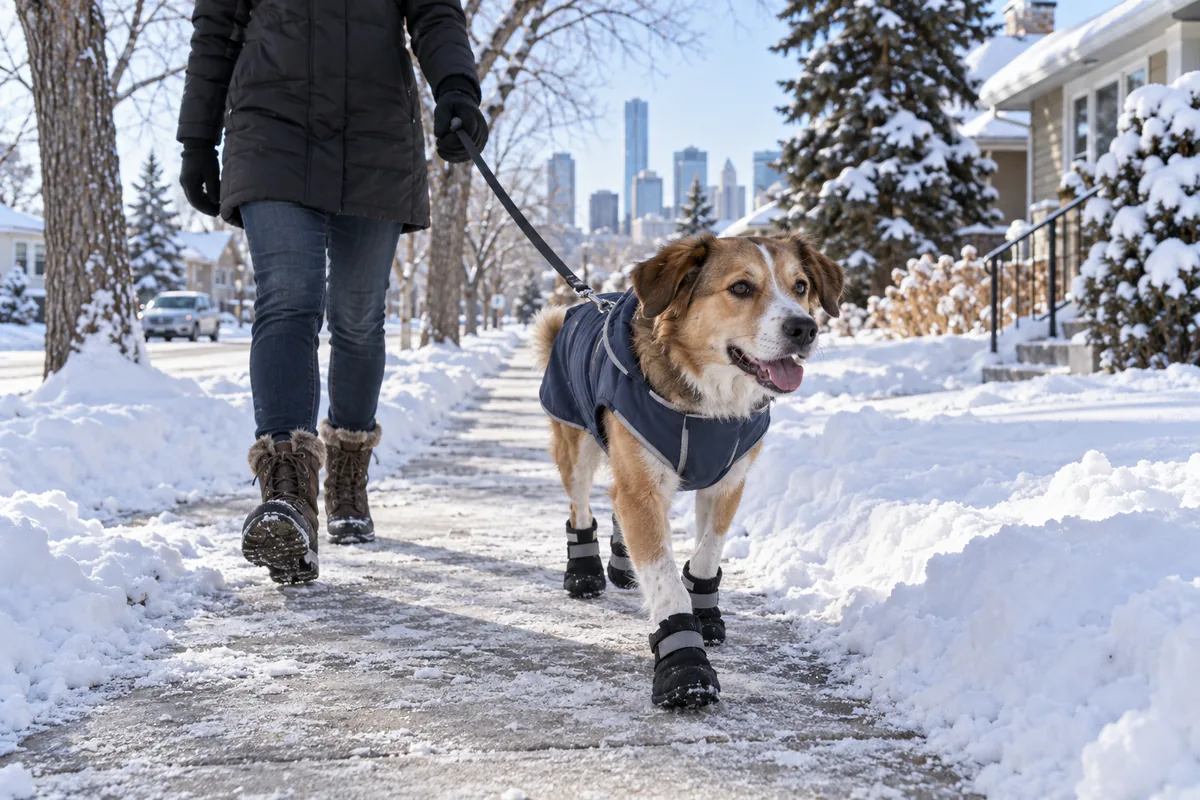
There is no single safe outdoor temperature for every dog or cat. On an Edmonton winter day, shorten walks when your pet shivers, lifts their paws, slows down or tries to turn home. Wipe ice melt from paws after walks, keep pets away from antifreeze and stay off uncertain river-valley ice. A pet that seems weak, confused or unable to warm up needs prompt veterinary advice.
Winter planning is different for a healthy adult husky than for a tiny puppy, a short-coated dog or a senior pet with arthritis. Watch your individual animal rather than using a fixed number on the thermometer. The City of Edmonton’s pet-safety guidance lists shivering, high stepping, paw licking, whining and slowing down as signs that cold exposure is becoming too much.
How long can I walk my dog in the cold?
Start with your dog’s size, coat, age, health and usual tolerance. Wind, wet fur and icy ground also matter. Choose shorter, more frequent outings in a cold snap and bring your dog inside at the first signs of discomfort. A coat or well-fitting booties may help some dogs, but neither makes a long walk safe in extreme cold. Cats should have a warm indoor place to stay; do not assume an outdoor cat can always find shelter.
What should I do about salt and ice melt on paws?
Ice melt can irritate paw pads and may be harmful if a pet licks it off. After a walk, check between the toes and wipe or rinse paws, then dry them thoroughly. Watch for cracked pads, redness, limping or repeated licking. If your pet has a painful paw, a wound or a persistent limp, call a veterinarian. Booties can reduce contact with irritating surfaces if your dog tolerates them and they fit well.
What are warning signs of frostbite or hypothermia?
Shivering, weakness, unusual quietness, stumbling or a pet who seems unable to warm up are reasons to get indoors and contact a veterinary team. Ears, paws, nose and tail tips are vulnerable to frostbite. The City notes that affected skin may change colour and that frostbite can be hard to detect at first. Do not rub a suspicious area or apply intense direct heat. A veterinarian should assess possible frostbite.
Why is antifreeze especially dangerous?
Antifreeze or coolant containing ethylene glycol can be fatal to pets even in small amounts. Store containers securely, clean spills promptly and keep animals away from garages, driveways and leaking vehicles. If you suspect a pet has licked coolant, seek emergency veterinary care immediately; do not wait for symptoms or try a home remedy. Bring the container or a photo if it is safe and quick to do so. The American Veterinary Medical Association’s household-hazards guide warns that even other coolant formulations can be dangerous.
What about Edmonton’s river-valley ice?
Keep dogs leashed near ponds, rivers and lakes during freeze-thaw periods. Ice appearance does not reliably show whether it will bear weight. The City’s ice-safety page advises keeping pets in sight and using a leash near water, especially during fall and spring transitions. If an animal falls through ice, call 911 rather than entering unsafe ice yourself.
A practical winter-walk checklist
- Check the forecast, wind and your pet’s behaviour before setting out.
- Use a leash and choose a route with a quick way home.
- Shorten the outing if your pet lifts paws, shivers or slows down.
- Dry paws and belly afterward; remove ice, salt and debris.
- Offer fresh water indoors and check that outdoor water is not frozen.
When should I call a vet?
Call for persistent limping, painful or discoloured skin, repeated vomiting after possible chemical exposure, weakness or a pet that is not acting normally after warming. For suspected antifreeze ingestion, collapse, severe weakness or breathing difficulty, use a 24-hour emergency hospital right away. Lakeview offers urgent assessment during clinic hours when available and can direct you if emergency referral is safer.
Need advice about your pet after a cold-weather outing? Call Lakeview Animal Hospital at (587) 463-9002. We are in South Edmonton at 4351 Savaryn Dr SW. For life-threatening signs after hours, go directly to a 24-hour veterinary emergency hospital.