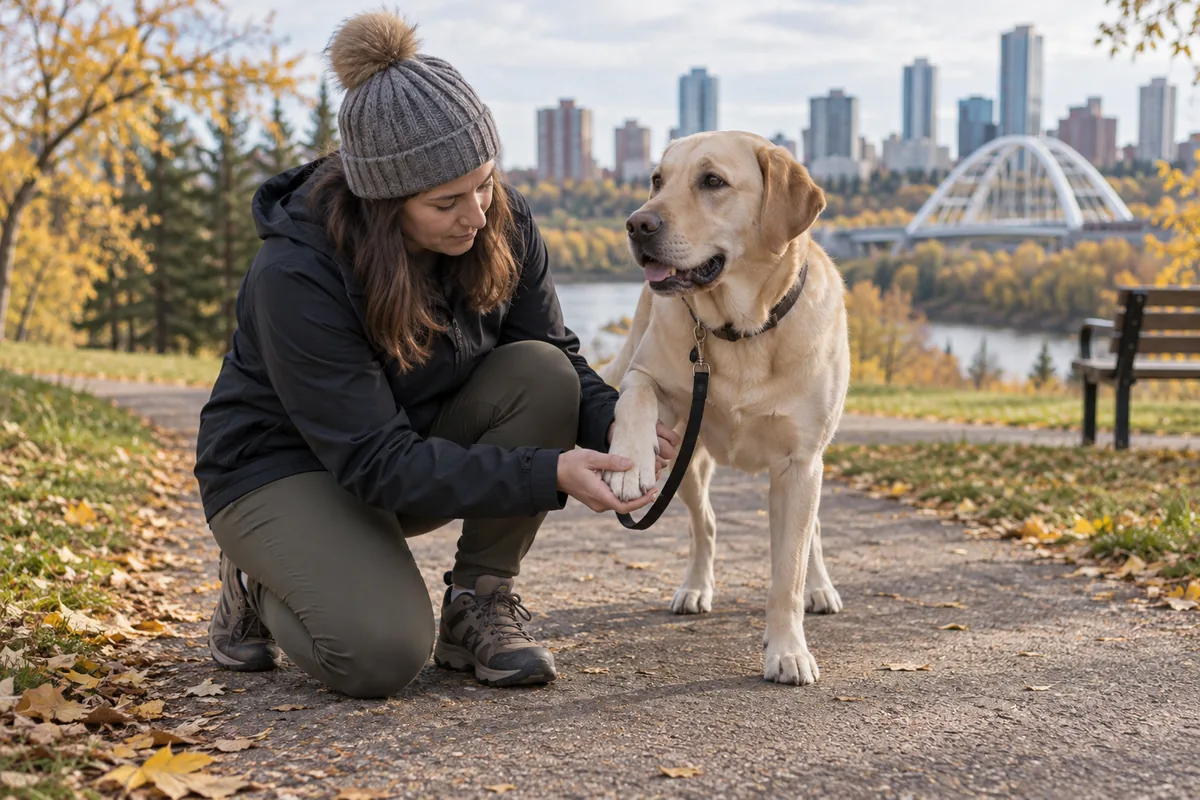
A dog that cannot stand, has an obvious broken or misshapen limb, is in severe pain, or began limping after major trauma needs emergency veterinary care. If your dog can walk but the limp persists, returns, worsens or is accompanied by swelling, call a veterinarian promptly. Rest your dog and do not give human pain medicine while arranging advice.
At Lakeview Animal Hospital in South Edmonton, we assess limping and mobility changes during clinic hours. Call (587) 463-9002 to describe the problem and check same-day availability. Our orthopedic assessment page explains how an examination and, when appropriate, imaging guide the next step.
When is a limp an emergency?
Go to a 24-hour veterinary emergency hospital if your dog was hit by a vehicle, had a serious fall or attack, cannot walk or stand without help, has an obvious fracture, or is severely distressed. A large wound, uncontrolled bleeding or signs of shock also warrant immediate care. Handle an injured dog gently; even a normally friendly pet may bite when painful.
VCA’s urgent-care guidance distinguishes a pet who can stand and walk from one who cannot, and recommends emergency care for major trauma or an obvious fracture. If you are unsure how serious the injury is, call a veterinary team rather than testing the leg repeatedly at home.
Why might my dog be limping after a walk?
A sore paw pad, broken nail, thorn or ice between the toes can cause a sudden limp. Pain can also come from muscles, ligaments, joints, bones or nerves. A limp after play does not automatically mean a simple sprain; for example, a knee injury may occur during ordinary activity. Older dogs may have arthritis or more than one source of pain, while growing dogs have different orthopedic concerns. The location and cause cannot be confirmed from a video or description alone.
What can I safely check at home?
- Limit activity. Keep your dog on a leash for bathroom breaks. Avoid running, jumping, stairs and rough play until a veterinarian advises otherwise.
- Look, without forcing. If your dog is comfortable, glance at the pads, nails and between the toes for a visible cut, lodged debris, swelling or a torn nail. Stop if your dog resists or seems painful.
- Take a short gait video. A few steps on a flat surface can help the veterinary team see an intermittent limp, but do not make a dog walk for filming if they are struggling.
- Note the pattern. Which leg is affected? Did it begin suddenly? Is it worse after rest or exercise? Has your dog slipped, jumped, fought or stepped on ice?
Do not manipulate a painful joint, try to “put it back,” or give ibuprofen, acetaminophen, naproxen or another human pain reliever. These drugs can be dangerous to pets. VCA’s first-aid guidance also advises caution when examining a painful dog.
What happens at a limping-dog appointment?
The veterinarian will ask about the onset and examine your dog’s gait, paws, joints and areas of pain. They may recommend X-rays or other tests depending on the findings. X-rays are useful for some bone and joint problems but do not answer every soft-tissue question. Treatment may involve rest, pet-safe pain control, a follow-up examination, referral or surgical planning; the decision follows a diagnosis, not the appearance of the limp alone.
Questions Edmonton owners ask
My dog is still running. Can I ignore the limp?
No. Some dogs continue to play despite pain. Reduce activity and call if the limp is persistent, recurrent or worsening, even if your dog remains energetic.
Should I wait a day to see if it goes away?
A very brief mild limp that resolves completely may not require an immediate visit. A limp that continues, comes back or affects normal walking deserves veterinary advice. Call sooner for a puppy, an older dog, visible swelling, a wound or a dog that seems unwell.
Can I book at Lakeview on Sunday?
Lakeview is open Sunday 10 a.m.–5 p.m. and Monday–Saturday 8 a.m.–6 p.m., except statutory holidays. Call ahead; same-day space depends on availability. Severe injuries may need direct emergency care.
Concerned about a limp? Call Lakeview Animal Hospital at (587) 463-9002. We are at 4351 Savaryn Dr SW, Edmonton. Tell us how your dog is walking now so we can help choose the safest next step.