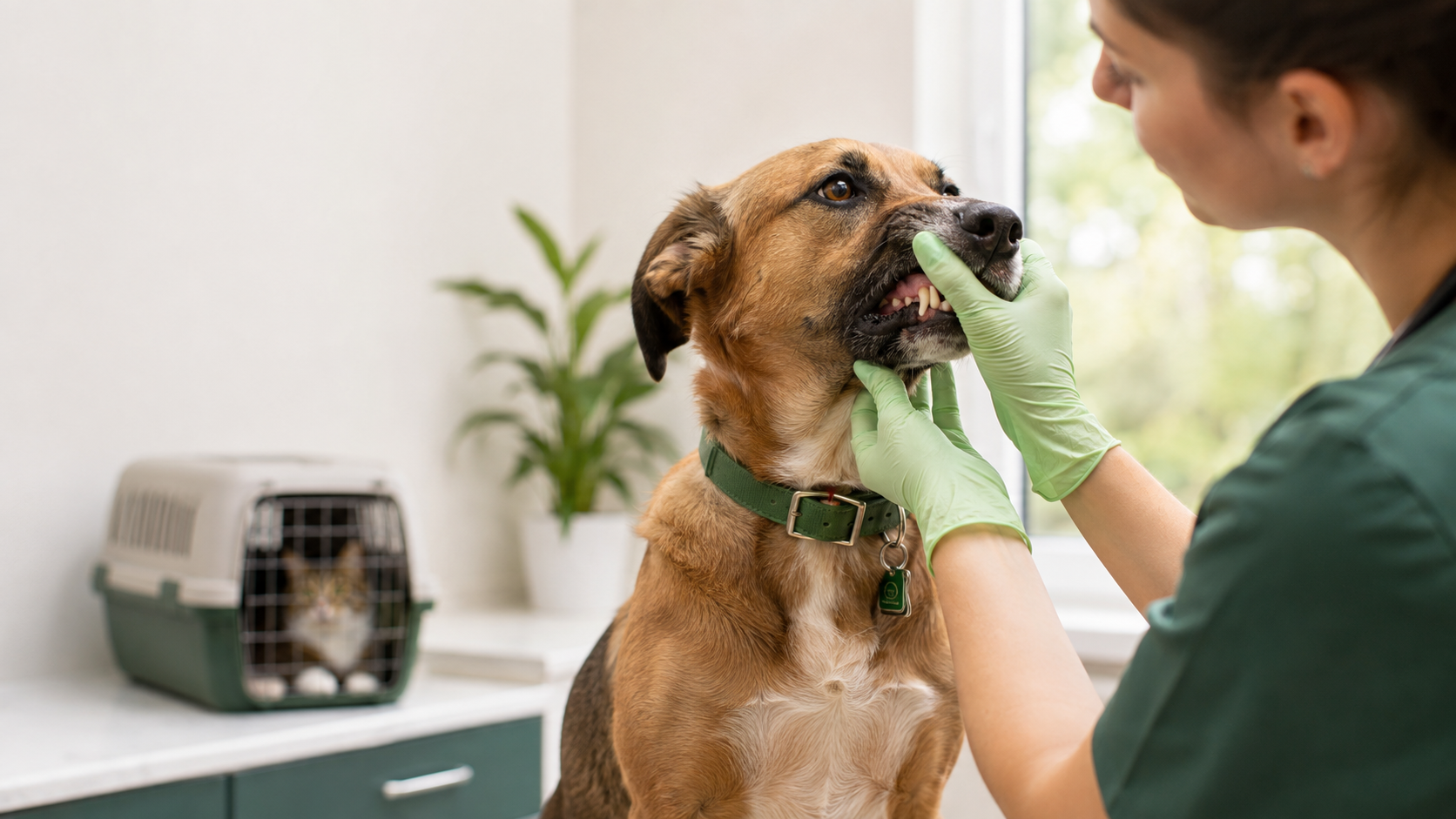
Which dental signs should owners watch for?
Look for persistent bad breath, visible tartar, red gums, blood on toys, pawing at the mouth, drooling, a change in chewing, dropping food, reluctance to take hard treats or swelling around the face. Cats may show subtle changes such as turning away from food, eating more slowly or grooming less.
These signs do not identify the exact problem. A fractured tooth, periodontal disease, a resorptive lesion, oral mass or another condition can look similar at home. Avoid pulling a loose tooth or probing a painful mouth.
Why can dental disease be missed?
Much of each tooth lies below the gumline, where it cannot be assessed fully in an awake pet. Some animals also mask discomfort and continue to eat. An awake examination can identify visible concerns and guide the recommendation, but it cannot reveal every tooth surface, root or pocket.
Lakeview’s dental care service explains how the team approaches oral assessment and treatment. The next step depends on the pet’s history, examination and overall health—not only the amount of visible tartar.
What may a professional dental procedure involve?
When a complete dental procedure is recommended, guidelines support general anesthesia with airway protection, monitoring, cleaning above and below the gumline, charting and dental radiographs as indicated. Anesthesia allows the team to evaluate and treat areas that cannot be safely addressed in an awake animal.
Beforehand, the veterinarian assesses the pet and discusses an individualized plan. Recommended testing, monitoring and pain control depend on age, health, medications and the planned procedure. Ask what is included in the estimate, how unexpected findings will be handled and what recovery instructions you will receive.
Is anesthesia-free cleaning an alternative?
Removing visible material from the crown of an awake pet’s tooth does not allow a complete examination below the gumline or dental radiographs, and it does not treat disease hidden there. A cosmetic change should not be mistaken for a comprehensive veterinary dental procedure. If anesthesia is a concern, discuss the individual risk assessment and monitoring plan with the veterinarian rather than substituting an incomplete cleaning.
What home care can help?
Home care works best as prevention and maintenance, not as a way to remove established disease or repair a damaged tooth. Toothbrushing with pet-safe toothpaste is often the most useful option when introduced gradually and tolerated. Never use human toothpaste, and do not force the mouth open when a pet is painful or fearful.
A veterinarian may also suggest an appropriate dental diet, chew or other product. Choose items suited to the animal’s chewing style and existing teeth; very hard objects can cause fractures. Ask the clinic to demonstrate technique after the mouth has been assessed.
How often should dental care be reviewed?
There is no universal cleaning interval. Breed, age, oral anatomy, home care, previous disease and current findings all matter. Include the mouth in the pet’s regular health and wellness exam, then follow the reassessment timing recommended for that individual. Year-round attention is useful in Edmonton because indoor routines and diet continue regardless of season.
Which dental signs need faster care?
Facial swelling, uncontrolled oral bleeding, major trauma, a jaw that appears abnormal, difficulty breathing or inability to close the mouth requires urgent veterinary direction. Call promptly for a broken tooth, marked pain, refusal of food, repeated mouth pawing or swelling, even if the pet otherwise seems alert. Do not give human pain medication.
What questions help you make a dental decision?
Ask what the awake examination showed, what remains unknown without radiographs, and which findings make treatment more or less urgent. Confirm how anesthesia will be monitored, how pain is managed, whether dental radiographs are available and how the team will contact you if an extraction or other unplanned treatment is recommended.
Afterward, request a clear summary of findings, treatments and home instructions. Ask when eating and activity should return to normal, which changes require a call and when the mouth should be rechecked. Understanding those decision points is more useful than comparing dental procedures only by price.